After a meal, blood sugar rises as the food is digested. Muscles that are working pull some of that sugar out of the blood. That is the simple idea behind the after-dinner walk, and it has been tested.
What the research found
A 2022 meta-analysis pooled seven studies in which adults either sat for hours after eating or broke up the sitting with light walking or standing. Light walking significantly lowered post-meal glucose and insulin. Standing lowered glucose but had no clear effect on insulin, so the authors called walking the better break.1
These were short lab studies that measured blood markers, not long-term health. They show what happens after a meal, not that a walk prevents disease on its own.
How long and how fast
- Breaks of a few minutes were enough to see an effect in the studies.1
- Easy pace is fine. This is not a workout.
- Every 10 minutes also counts toward the 150 minutes of moderate activity a week the WHO recommends for adults.2
Make it automatic
| Barrier | Fix |
|---|---|
| Dark or cold evenings | Walk inside: kitchen, hallway, stairs. Or do it after lunch instead. |
| No time | Five minutes. Dishes can wait five minutes. |
| Forgetting | Shoes by the door, and the walk attached to one fixed thing: clearing the table. |
If you take insulin or medication that lowers blood sugar, ask your doctor before changing activity around meals.
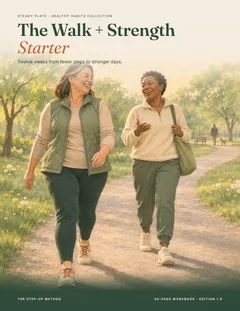
A 12-week step plan from your own baseline and eight at-home strength exercises.
Sources
- Buffey AJ et al. The acute effects of interrupting prolonged sitting time in adults with standing and light-intensity walking on biomarkers of cardiometabolic health in adults: a systematic review and meta-analysis. Sports Med. 2022;52:1765-87. springer.com
- World Health Organization. WHO guidelines on physical activity and sedentary behaviour. 2020. who.int
Educational information, not medical advice. Sources checked 21 November 2026.