Ultra-processed foods are industrial products built from refined ingredients and additives: most packaged snacks, sweet cereals, soft drinks and many ready meals. Whether they make us eat more was tested directly in 2019.
The trial
Twenty adults lived at the NIH Clinical Center for four weeks. For two weeks they were offered an ultra-processed diet and for two weeks an unprocessed one, in random order. Both diets offered the same calories, sugar, fat, fiber and salt, and people could eat as much as they liked. On the ultra-processed diet they ate about 500 more calories a day and gained weight; on the unprocessed diet, they lost weight.1
What it does not mean
- It was a small, short study. It shows that these foods made people eat more in those conditions, not which ingredient causes it.
- Not every processed food is a problem. Frozen vegetables, canned beans, plain yogurt and whole-grain bread are processed and useful.
Swaps that keep it simple
| Instead of | Try |
|---|---|
| A packaged snack bar | An apple and a handful of nuts |
| Sweetened yogurt | Plain yogurt with berries |
| A ready meal | Leftovers from a batch of roasted vegetables, a grain and a protein |
| Soft drinks | Water or sparkling water |
Then build meals on the plate pattern: half vegetables, a quarter protein, a quarter whole grains or other fiber-rich carbs.2
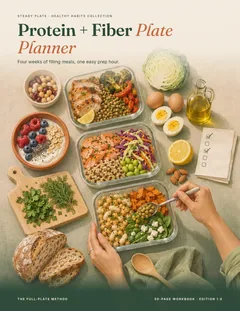
Four weeks of filling meals, 24 recipes, four shopping lists and a one-hour prep routine.
Sources
- Hall KD et al. Ultra-processed diets cause excess calorie intake and weight gain: an inpatient randomized controlled trial of ad libitum food intake. Cell Metab. 2019;30:67-77. doi.org
- Harvard T.H. Chan School of Public Health. The Healthy Eating Plate. hsph.harvard.edu
Educational information, not medical advice. Sources checked 21 November 2026.